
Views: 0 Author: Site Editor Publish Time: 2026-06-25 Origin: Site
High-capacity commercial setups face critical risks during routine maintenance cycles. Technicians frequently connect diagnostic gauges or swap inline components. They risk exposing the entire system to sudden pressure drops every single time. Unintended refrigerant loss presents severe operational hazards for large-scale operations. Service ports lacking adequate automatic safeguards inevitably trigger uncontrolled venting events. These preventable leaks compromise strict environmental compliance. They also degrade overall system cooling efficiency significantly.
You need reliable engineered solutions designed to halt fluid flow instantly. We will explore the precise internal mechanics driving these essential safety safeguards. Procurement managers and facility engineers will discover a highly concrete evaluation framework. You can use this guide to specify and source reliable isolation components. We focus heavily on matching hardware to high-demand, high-pressure applications to ensure absolute system integrity.
Understanding these mechanics requires examining the internal engineered geometry. An internal spring-loaded Schrader or precise poppet mechanism drives the action. It actuates precisely the moment a technician engages the line. You push the specialized fitting firmly into place. The central depressor pin forces the internal spring open. It allows high-pressure fluid to pass freely across the barrier. You subsequently disconnect the external diagnostic fitting. The internal spring instantly snaps back into its heavily seated position. This immediate mechanical response relies on calibrated precision tension. Engineers design the spring rate to overcome internal fluid pressures. It seals the port tightly against atmospheric exposure.
Standard manual fittings inevitably leak a small amount of fluid. Unscrewing conventional threads creates a brief physical gap. High-pressure gas escapes rapidly through this temporary void. An automatic shut-off physically prevents this fractional refrigerant loss entirely. The primary internal seal closes milliseconds before the threads completely disengage. We call this critical function transient loss mitigation. It effectively protects both the surrounding environment and baseline system charge levels. A self-closing quick valve completely standardizes routine diagnostic procedures. Technicians no longer worry about timing their disconnection speed.
Pressure equalization plays a massive role in automatic disconnection. The internal poppet pushes against the flow direction. This design uses the system's own hydrostatic pressure to force the seal tightly closed. Higher internal pressures actually create a much stronger mechanical seal. The spring simply provides the initial closing force during the transition. Once fully seated, fluid dynamics take over entirely. They lock the microscopic gaps tightly.
Facilities integrate these automatic safeguards at multiple critical junction points. You will typically find them installed on high and low side service ports. They also belong permanently on critical liquid line connections. Gauge manifold interfaces rely heavily on them for rapid, safe diagnostics. Placing them at strategic access points guarantees safer localized isolation. They simplify complex preventive maintenance schedules across large retail layouts. Operators save countless hours during routine seasonal inspections.
Many field professionals frequently confuse these two distinct operational categories. Quick-closing designs inherently require direct manual operation. They frequently utilize quarter-turn ball mechanisms or heavy-duty levers. Human operators actuate them rapidly during sudden line emergencies. They provide essential system isolation during catastrophic pipe failures. We rely heavily on them for primary main line shut-offs. Their larger internal bore handles massive volumetric flow smoothly. However, they remain highly vulnerable to simple human forgetfulness.
In stark contrast, self-closing models function entirely automatically. The physical act of disconnection mechanically actuates the primary seal. They completely remove human error from the fluid sealing process. Technicians cannot accidentally forget to close them after servicing. They act independently based entirely on mechanical engagement. Their internal springs never rely on external human memory.
Isolation zones dictate which technology works best. We use quick-closing models to isolate entire evaporator coils or condenser banks. Their wide-open bore allows massive fluid volumes to circulate unimpeded. Self-closing models strictly serve diagnostic and modular connection duties. They handle fractional fluid volumes needed for gauge readings or minor component swaps. Mixing up these applications causes immediate operational bottlenecks.
You must apply the correct component for specific operational scenarios. Specifying the wrong isolation method compromises facility safety protocols. We use a straightforward decision matrix to guide component selection.
| Feature | Quick-Closing Models | Self-Closing Models |
|---|---|---|
| Actuation Mechanism | Manual (Quarter-turn lever or ball) | Automatic (Spring-loaded mechanical) |
| Primary Use Case | Main line isolation, emergencies | Service ports, diagnostic hookups |
| Human Error Risk | High (Operator must remember to close) | Zero (Mechanically actuates upon release) |
| Flow Restriction | Minimal (Full bore opening) | Moderate (Internal poppet restricts flow) |
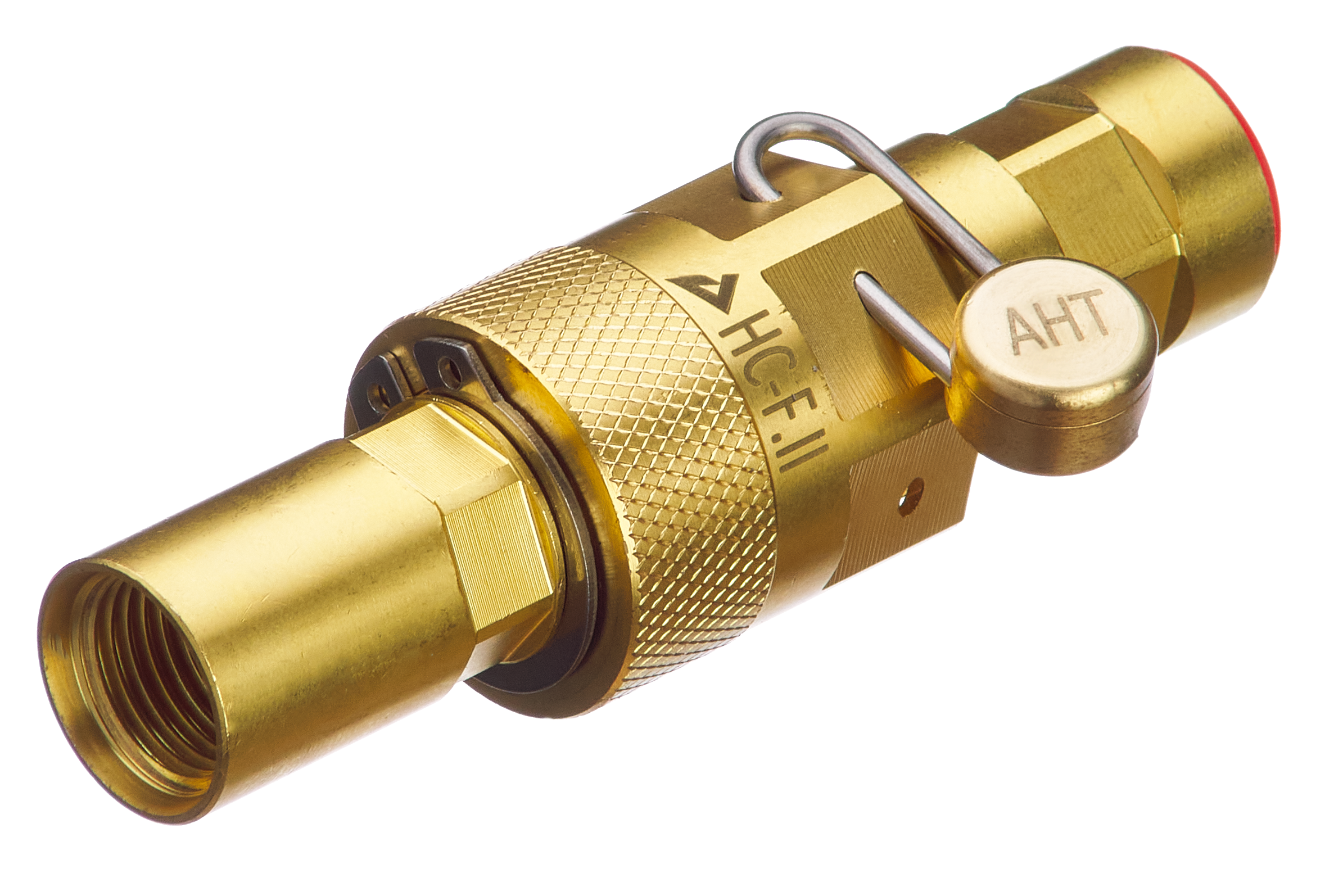
You must evaluate heavy-duty materials rigorously before finalizing procurement. Industry standards heavily favor forged metal construction over cast alternatives. A premium brass quick valve delivers optimal corrosion resistance against condensation. It maintains dense structural integrity against constant mechanical fatigue. Machining tolerances dictate exactly how well internal components fit together. Poor factory machining leads directly to premature seal failure. Smooth thread engagement prevents dangerous metal galling during installation.
Verifying Maximum Allowable Working Pressure (MAWP) remains absolutely critical. Modern cooling systems utilize highly volatile, high-pressure refrigerants. Common examples include R-410A or supercritical CO2 (R-744). You must match manufacturer burst ratings to these specific dynamic loads. Underspecified components present serious explosive safety hazards under heat. Every single commercial fridge valve requires explicit, documented pressure certifications. We never install components lacking transparent engineering data.
Burst pressure testing separates premium components from cheap alternatives. Engineers typically design burst ratings at three times the standard working pressure. This safety margin protects technicians during sudden thermal spikes. Ambient temperatures rising rapidly on a rooftop condenser spike internal pressures instantly. Your chosen fittings must handle these unpredictable surges without catastrophic rupture.
Internal O-rings face incredibly harsh chemical environments daily. Elastomeric seals typically utilize Neoprene, PTFE, or Viton formulations. They must resist aggressive degradation from modern HFCs and HFOs. Synthetic lubricants like POE and PAG dissolve incompatible rubber compounds. You must address chemical compatibility proactively during the specification phase.
Internal geometry directly dictates the overall flow capacity. Restrictive designs introduce severe pressure drops across the connection. These artificial drops can skew sensitive diagnostic gauge readings. They heavily impede rapid charging times during seasonal maintenance. We evaluate the stated Cv rating carefully. It ensures the port geometry does not throttle critical fluid transfer.
Key evaluation best practices include:
Modern operational facilities must strictly follow mandated environmental protocols. EPA Section 608 mandates minimizing de minimis refrigerant releases. You must align component choices against updated ASHRAE and ISO safety standards. Proper hardware prevents catastrophic regulatory fines from environmental agencies. It actively shrinks facility carbon footprints by eliminating micro-leaks. Compliance protects your corporate reputation and bottom line.
Improper installation easily neutralizes premium engineering investments. Over-torquing threaded connections creates invisible micro-fractures in the brass housing. Technicians sometimes seat the refrigeration quick coupling improperly during rushed service calls. This slight misalignment causes immediate weeping across the primary seal. Contaminants entering during sloppy installation destroy internal precision seals. You must enforce strict cleanliness standards during every connection event.
Contamination remains a silent killer of hydraulic and pneumatic seals. Technicians dropping hoses in dirt introduce microscopic silica particles. These abrasive particles scratch the delicate brass seating surfaces upon connection. Even microscopic scratches compromise the vacuum integrity completely. You must utilize protective dust caps whenever the port remains unused. Simple plastic caps extend the component lifespan significantly.
We must maintain an objective tone regarding component lifecycles. Assuming permanent, zero-leak performance creates highly dangerous operational blind spots. Internal spring tension gradually weakens over thousands of mechanical cycles. Elastomeric seals eventually degrade under constant thermal stress. They require scheduled, proactive inspection to verify sealing integrity.
Avoid these common installation mistakes:
Selecting the exact component requires a highly systematic approach. Guessing specifications leads to immediate operational failure. Follow these logical steps to source the correct part.
Specifying the correct automatic shut-off mechanism represents a vital operational investment. These precision components actively safeguard technician safety during stressful maintenance. They enforce strict environmental compliance by eliminating accidental venting. Matched flow capacities and optimal chemical compatibility ensure peak system efficiency. You protect expensive compressor racks from gradual charge depletion.
Standardizing your connection hardware across all facilities streamlines maintenance dramatically. It reduces the distinct number of spare parts required on service trucks. Technicians work faster when they encounter predictable, reliable connection points. Focus entirely on proven mechanical designs backed by transparent engineering data. Quality components always pay dividends through extended system reliability.
Audit your current service ports immediately to identify vulnerable manual fittings. Consult updated engineering schematics to verify your required pressure tolerances. Engage specialized distributors to source parts matching your exact parameters. Proactive upgrades today prevent catastrophic fluid loss tomorrow.
A: It depends entirely on coupling frequency and extreme environmental factors. Typical commercial lifespans range between three to five years. You must perform routine leak-checking of the internal seal annually. Preventive maintenance ensures the internal spring mechanism remains responsive. Harsh environments may accelerate standard elastomeric wear.
A: Technicians can sometimes replace worn internal core depressors and external O-rings. However, the cost-to-labor ratio usually makes manual repairs highly inefficient. Industry best practices strictly dictate full component replacement. Installing a brand new unit guarantees absolute safety assurance. It completely restores original factory pressure tolerances.
A: No. The forged brass body is universally robust across different systems. However, the internal elastomer seals vary significantly between manufacturers. You must specifically rate these chemical seals for your system's exact refrigerant. They must also tolerate the specific synthetic compressor oil circulating inside.

