
Views: 0 Author: Site Editor Publish Time: 2026-05-31 Origin: Site
The reliability of any plumbing, gas, or HVAC system relies heavily on the integrity of its transition points. When commercial infrastructure fails, the breakdown usually occurs at the joints. This guide provides technical specifiers, contractors, and procurement teams with a clear, reliable framework. We want to help you evaluate and select the exact components required for your specific application. You will learn to properly match thread compatibility, respect dynamic pressure limits, and maintain strict regulatory compliance across all installations.
Brass is highly durable and naturally corrosion-resistant. It remains a premier choice for fluid and gas transfer. However, improper thread matching leads directly to catastrophic leaks. For instance, forcing an NPT thread into a BSP port destroys the threads entirely. Furthermore, ignoring material compliance laws causes severe code violations. Lead-free mandates protect public drinking water systems and carry heavy penalties if ignored. By following our structured guidelines, you ensure safe, reliable operations. We will preview common pitfalls and highlight industry best practices. You will gain actionable insights to improve your system layouts today.
Incorrect component selection causes severe system downtime. It forces repair crews to redo completed work. You waste valuable labor hours and stall critical project timelines. We must treat joint specification as a rigorous engineering process. A universal joint does not exist across modern gas, water, and refrigerant systems. Every industrial application demands a highly tailored approach. For example, your selected brass adapter fittings must match the precise physical properties of the medium they convey. If they fall short, the system will eventually fail.
Fluid and gas characteristics vary wildly. Compressed air systems require incredibly tight seals to prevent costly energy losses over time. Natural gas lines demand absolute leak prevention to avoid severe explosive hazards. Potable water networks must remain completely free of toxic chemical contaminants. Refrigerants, like Freon or R-410A, introduce unique operational challenges. They operate under continuous thermal cycling. Refrigerants will exploit even the smallest microscopic gaps inside a joint. You cannot treat these different mediums the same way during procurement.
You must calculate pressure and temperature variables early in the design phase. High-temperature HVAC lines require specific structural wall thicknesses. Thin metal walls will warp under sustained heat. Conversely, high-pressure hydraulic and pneumatic lines dictate aggressive safety factors. You cannot apply residential water pressure rules to an industrial pneumatic press. If you do, the joints will rupture forcefully. Assess your baseline operating pressures first. Then, rigorously account for unpredictable pressure spikes across the network.
| System Medium | Primary Operational Challenge | Temperature Variance | Optimal Specification Focus |
|---|---|---|---|
| Compressed Air | High vibration, energy loss via micro-leaks | Low to Moderate | Vibration-resistant sealants, strict pressure ratings |
| Natural Gas | Explosion risk, chemical degradation of seals | Moderate | Gas-rated yellow tape, AGA/CSA certifications |
| Potable Water | Toxicity concerns, scale buildup | Low to High (Heaters) | Certified lead-free materials (NSF/ANSI 61) |
| Refrigerants (HVAC) | Thermal expansion, high pressure cycles | Extreme Cycling | Heavy wall thickness, flared or brazed integration |
Thread compatibility remains your absolute highest priority. You must completely understand the geometric differences between National Pipe Taper (NPT) and British Standard Pipe (BSP). They often look identical to the naked eye. However, their physical thread angles and pitches differ completely. NPT features a sharp 60-degree angle. BSP features a slightly rounder 55-degree angle. This slight microscopic difference makes them entirely incompatible.
When do we explicitly specify an NPT brass connector? You will use them as the default standard across North American plumbing layouts. The tapered design allows the male and female threads to pull tight as you turn them. This mechanical action creates heavy interference. NPT inherently relies on thread deformation to work. It also requires approved chemical sealants. You must apply Teflon tape or pipe dope to achieve a fluid-tight seal. Without sealants, NPT joints will always eventually leak under pressure.
Conversely, you will need a BSP brass fitting for imported machinery. You frequently see them in marine applications and European equipment. BSP falls into two distinct categories. BSPT stands for tapered threads. BSPP stands for parallel threads. BSPP relies on a bonded seal ring or a crush washer to prevent leaks. It does not seal directly on the threads themselves. You must recognize these categories to avoid severe assembly errors on the job site.
We must explicitly warn you about physical implementation risks. Never attempt cross-threading NPT and BSP components. Novice mechanics sometimes try to force them together using heavy wrenches. They might feel deceptively tight initially. However, this brute force causes severe hairline cracking inside the metal. Over time, the stressed brass will inevitably fail. A sudden blowout under high pressure can injure personnel. It will absolutely flood your facility and ruin nearby equipment.
| Specification Feature | NPT (National Pipe Taper) | BSP (British Standard Pipe) |
|---|---|---|
| Thread Angle | 60 degrees | 55 degrees |
| Thread Shape | Flattened peaks and valleys | Rounded peaks and valleys |
| Primary Region | North America | Europe, UK, Asia, Global Marine |
| Seal Method | Thread deformation + Tape/Dope | Thread taper (BSPT) or O-ring/Washer (BSPP) |
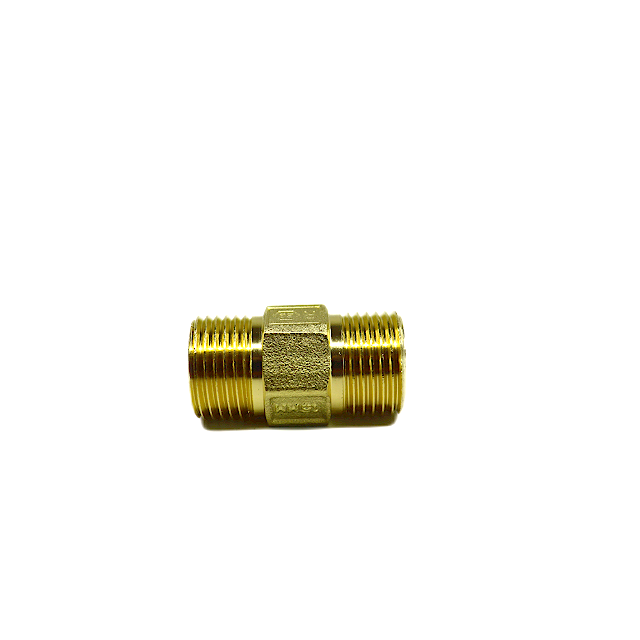
Every transition point serves a highly distinct operational purpose. You must align your connection profile directly with your facility's long-term maintenance strategy. We categorize these architectural profiles based on structural rigidity, general serviceability, and modularity.
Brass is an industrial alloy formed from copper and zinc. Manufacturers alter this ratio to achieve different mechanical properties. We must navigate strict regulatory realities regarding material composition. Federal law rigorously governs exactly what touches our public drinking water. You cannot ignore these laws under any circumstances.
The Safe Drinking Water Act explicitly prohibits standard brass in potable water networks. Standard brass historically contained small amounts of lead. Manufacturers added it to improve cutting machinability on the factory floor. Today, specifiers must rigorously verify the "lead-free" stamp before installation. Lead-free brass contains 0.25% lead or less on its wetted surfaces. You should always look for NSF/ANSI 61 and NSF/ANSI 372 certifications. Without these specific stamps, your installation will fail municipal inspections immediately.
Corrosion risks pose another major systemic threat. Dezincification occurs when highly acidic or highly alkaline water aggressively strips zinc from the alloy. Over several years, the brass turns into a weak, porous copper shell. It eventually crumbles from the inside out. If you operate in geographic areas with aggressive water chemistry, you must adapt. Upgrade the system to specify Dezincification-Resistant (DZR) brass. DZR alloys undergo special thermal heat treatments to securely lock the zinc molecules in place.
Gas system specifics require deeply specialized attention. Gas adapters must strictly meet CSA or AGA safety certifications. You cannot use water-rated components on a volatile gas line. Furthermore, sealants play a highly critical role. Certain thread sealants must be strictly rated for gas environments. You must use thick yellow Teflon tape instead of standard thin white tape. Yellow tape resists chemical degradation from natural gas and propane. Standard white tape will eventually dissolve over time, causing highly explosive gas leaks inside the building walls.
Successful procurement demands a highly structured approach. You cannot guess pipe dimensions or assume certifications. We strongly recommend following a strict shortlisting logic before issuing any purchase orders to your vendors. Missing a single specification detail often ruins an entire installation schedule.
You actively protect your project timeline by finalizing these technical details early. Errors in procurement always compound into massive installation delays. When parts arrive incorrectly, job sites shut down entirely.
Successful procurement relies on a comprehensive, technically sound evaluation framework. You must precisely match thread standards to avoid mechanical joint failure. You must verify exact material compliance based on the specific fluid or gas flowing through the system. Never compromise on strict lead-free rules for drinking water applications. Finally, you must select the correct connection profile to easily accommodate future maintenance protocols. Installing a well-placed union today undoubtedly saves countless hours of labor tomorrow.
We urge you to review your current architectural system specifications carefully. Consult your local building codes to ensure full legal and safety compliance. If you face complex transitional layouts, do not simply guess. Reach out to a dedicated technical sales representative immediately. Provide them with your exact required dimensions, peak pressure metrics, and fluid application type. Proactive planning always guarantees a safe, leak-free, and highly durable installation.
A: Yes, provided it meets local code certifications, has the correct wall thickness, and is installed with gas-rated sealant. Never use plumbing-grade compression fittings for gas.
A: NPT seals via the interference of tapered threads and sealant; flare fittings seal via a mechanically compressed metal-to-metal cone, typically used in high-pressure HVAC/refrigeration.
A: It depends on the internal mechanism. Pneumatic quick connects generally handle 150-300 PSI, but hydraulic applications require specific high-pressure quick disconnects.
A: Brass and galvanized steel risk galvanic corrosion. We recommend dielectric unions if water is present, though brass acts as an acceptable transitional metal in some dry/gas scenarios.

