
Views: 0 Author: Site Editor Publish Time: 2026-05-18 Origin: Site
Installing a modern mini-split system demands precision and careful planning. You achieve optimal cooling performance by handling the internal components correctly. Eliminating the need for manual vacuuming streamlines the entire installation process. A high-quality precharged AC lineset allows for true plug-and-play functionality. This innovation removes complex equipment requirements from your workflow. However, choosing the wrong materials can cause immediate mechanical failures.
Our guide provides an evidence-based framework for evaluating various connection technologies. You will learn specific sizing rules and essential material quality benchmarks. We aim to help buyers select the right kit confidently without risking catastrophic system damage. Let us explore the exact specifications required for a secure, leak-free setup.
Buyers frequently confuse industry terms when selecting equipment. You must get the terminology right before evaluating specific products. Making a mistake here often leads to severe air contamination inside the compressor.
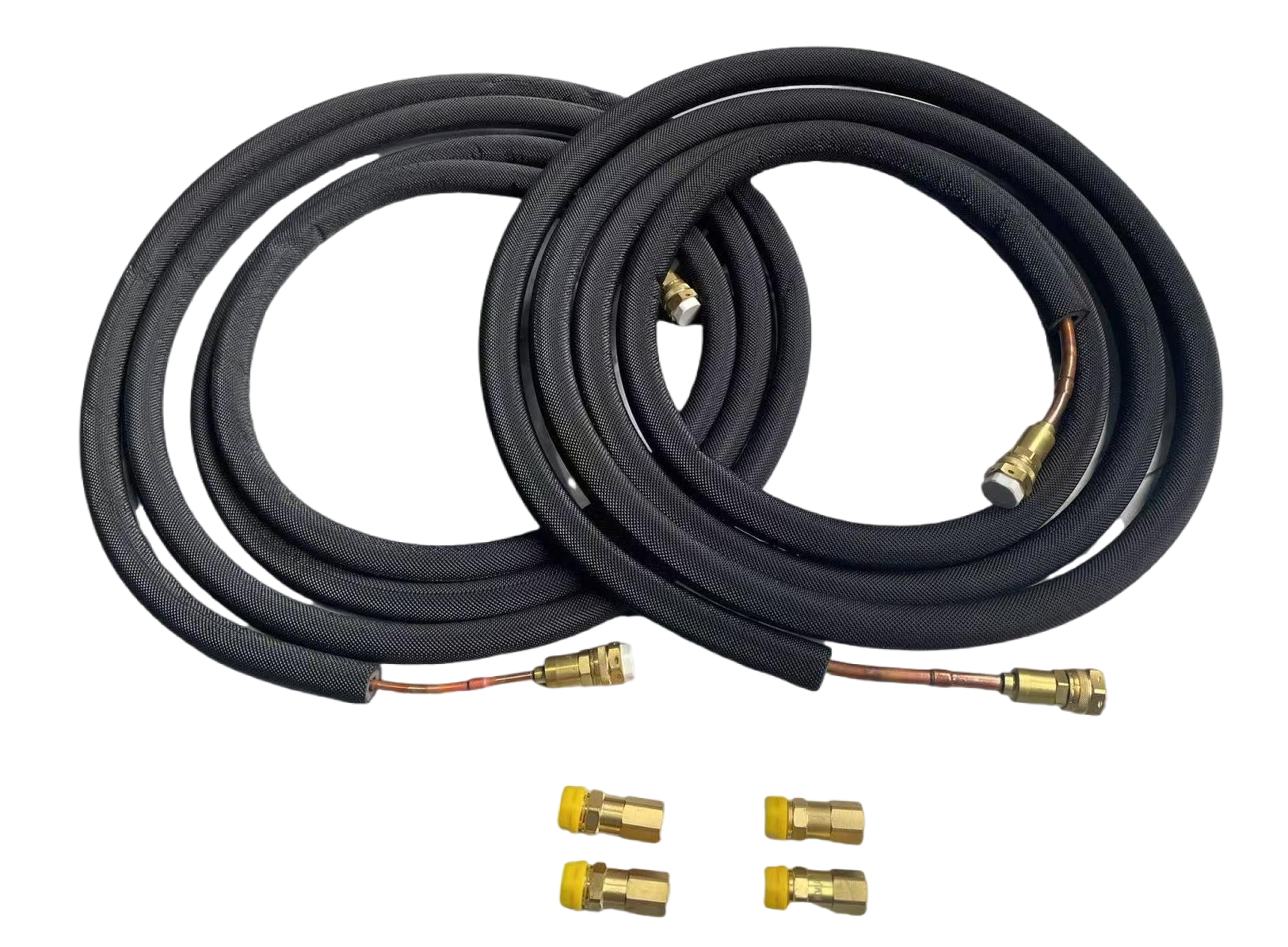
A precharged copper lineset arrives directly from the factory filled with pure refrigerant. It holds the exact chemical volume needed for operation. It utilizes specialized mechanical valves at both ends. These internal seals block ambient air from entering during the physical connection. You require zero manual vacuuming.
Conversely, a vacuumed AC pipe kit arrives completely empty. Manufacturers purge it of all internal air and moisture before shipping. The actual refrigerant remains stored entirely inside the outdoor condenser unit. You still need careful handling. Ambient air must not enter the empty tubes before releasing the condenser's payload.
Traditional HVAC systems require technicians to pull a vacuum. This process removes non-condensable gases from the lines. Non-condensables cause erratic system pressures. They force the compressor to work harder. They reduce the overall cooling capacity. Pre-charged lines eliminate this entire concern. The factory seals the lines under strict quality controls. They guarantee absolute purity inside the tube. You bypass the risk of inadequate vacuuming entirely.
We see a major operational risk here. You might buy a vacuumed kit assuming it contains active refrigerant. You might attempt cutting either pipe type. Doing so introduces standard atmospheric air into pure chemical refrigerant. This error requires a total system flush. A licensed professional must perform a deep-vacuum procedure to correct it.
You must evaluate structural integrity rigorously when building out your setup. Ease of use also dictates assembly success. We rely on concrete engineering data to compare older methods against newer designs.
Flame welding represents the third generation of connections. It holds significant physical flaws. Applying high heat creates dark internal oxides. These flaky oxides travel through the system and clog sensitive capillary tubes. The extreme heat also alters the copper's physical grain structure. Standard C12200-grade copper boasts excellent tensile strength originally. It typically measures between 215 and 275 MPa. Flame welding drops this strength significantly down to 150–180 MPa. This structural compromise drastically reduces the maximum safe working pressure.
A modern flare nut screw-on or quick connect lineset represents the fourth generation. It brings distinct structural advantages.
Hydrostatic pressure testing involves filling the line with pressurized nitrogen. Technicians pressurize the system far beyond normal operating levels. A typical mini-split runs at roughly 120 to 150 PSI on the low side. Testing them to 400+ PSI ensures a massive safety factor. It accounts for extreme temperature spikes during peak summer days. The 500+ lbs pull test simulates physical stress. It mimics accidental trips over the line. It mimics house settling or extreme winds pulling on the outdoor condenser. Passing these rigorous tests proves the mechanical integrity matches professional brazing.
| Feature | Flame Welding (3rd Gen) | Quick Connects (4th Gen) |
|---|---|---|
| Tensile Strength | Reduces to 150-180 MPa | Maintains 215-275 MPa |
| Internal Oxidation | High risk of capillary clogs | Zero risk (no heat applied) |
| System Relocation | Requires cutting and re-welding | Auto-resealing mechanical valves |
| Vacuum Requirement | Mandatory field operation | None (factory sealed) |
Addressing dimension requirements removes the primary installation friction point. You must plan your physical routing carefully. The copper pipes tolerate very little margin for error.
Always align the liquid and suction line diameters perfectly. They must match the condenser's factory specifications. A common residential size is 1/4" liquid by 3/8" suction. Adapters do exist for mismatched components. However, they introduce unnecessary mechanical failure points. We strongly advise against using third-party sizing adapters. Keep the flow path as uniform as possible.
Handling excess length requires strict mechanical discipline. Never cut a pre-charged pipe. Cutting it instantly voids the entire system. It vents environmentally harmful chemicals directly into the atmosphere. You must manage any extra length safely. Follow these specific steps for handling excess length:
Positioning the coil horizontally ensures proper compressor oil return. Compressors circulate oil alongside the refrigerant. This oil lubricates the internal moving parts. The oil must return to the compressor continuously. Vertical pipe runs make oil return difficult because gravity fights the flow. Coiling the excess line horizontally creates a safe resting zone. It prevents the oil from pooling in deep vertical drops. If you coil the line vertically, you create a trap. The compressor pushes oil into the vertical loop. It lacks the pressure to push it back up. The compressor eventually runs dry and seizes.
Extending the run demands careful mathematical calculation. Base factory pre-charges generally handle 25-foot runs smoothly. You might use authorized coupler kits to connect two segments. If so, calculate the extra distance accurately. Runs exceeding the manufacturer's maximum often require intervention. An experienced professional must weigh in supplementary refrigerant. They add specific ounces per additional foot. This maintains the precise pressure ratios required for cooling.
Buyers need an authoritative checklist for shortlisting products. Visual inspections reveal a lot about manufacturing standards. You must identify specific material benchmarks before purchasing. A reliable split AC connecting pipe meets several stringent criteria.
Demand fully annealed copper for your project. Copper work-hardens when you bend it. Bending a hard-drawn pipe causes micro-fractures along the curve. Fully annealed copper undergoes a specialized heat treatment. Manufacturers heat the copper and cool it slowly. This resets the internal crystalline structure. The metal becomes incredibly malleable. You can bend it gently around a 90-degree corner without specialized pipe benders. However, you must still support the bend with your thumbs. Never force a sharp angle. A kinked line restricts flow severely. It causes the evaporator coil to freeze solid.
Check exact refrigerant compatibility next. Ensure the piping matches your equipment's operating pressures. Your specific system dictates this chemical requirement. Legacy R-410A systems have distinct pressure needs. Newer environmental standards push for different chemical blends. A modern R32 quick connect lineset must handle higher operating pressures. Systems using R-454B also require specialized high-pressure seals. Using incompatible seals leads to slow, undetectable micro-leaks over time.
Insulation standards matter greatly for energy efficiency. Superior products feature thick, continuous foam insulation. The minimum acceptable thickness is 1/2-inch. It must remain highly UV-resistant to survive harsh sunlight. Standard insulation degrades rapidly under direct sunlight. UV rays break down the foam cells. The insulation turns brittle and crumbles away. Exposed copper absorbs ambient heat. This ruins the system's efficiency. The compressor runs constantly to overcome this heat gain. Always verify the UV-resistance rating.
It should also carry a recognized UL fire-safety rating. This certification ensures it meets strict local building codes. It resists flame spread in residential structures. Standard foam emits toxic smoke when burned. UL-rated materials slow flame spread and reduce smoke toxicity.
Look closely for anti-cross-threading features. High-quality brass fittings feature dedicated alignment guides. These metal guides prevent users from stripping the threads. Stripped brass ruins the mechanical seal instantly. Precision machining guarantees a perfect alignment every time you hand-tighten the nuts.
Choosing the right equipment determines your long-term success. Prioritize precise measurements first before ordering anything. Pre-charged pipes remain strictly unalterable by design. Verify your wall thickness accurately. Calculate your vertical drops carefully. You must know your exact routing path beforehand.
Invest in verifiable 4th-generation technologies. Non-piercing mechanical joints offer proven, long-lasting reliability. Demand solid pressure-testing data from the manufacturer. Insist on code-compliant, thick insulation for maximum safety. Following these exact guidelines guarantees a highly secure installation. You achieve a completely leak-free setup efficiently. You protect your property and your equipment simultaneously by making informed, standards-based decisions.
A: No. Cutting the line will vent the factory-loaded refrigerant into the atmosphere and permanently ruin the lineset. Excess length must be horizontally coiled.
A: Ambient air introduces moisture, which mixes with refrigerant oil to create destructive acids. The system will need to be completely evacuated, deep-vacuumed, and recharged by a professional.
A: Yes, but only by using manufacturer-approved mechanical coupler kits. You must also consult the manual to see if the increased overall length requires adding supplemental refrigerant.

