
Views: 0 Author: Site Editor Publish Time: 2026-09-06 Origin: Site
Designing HVAC and refrigeration systems carries incredibly high stakes for any engineering project. If you undersize the lines, you severely restrict refrigerant flow and starve the compressor of required capacity. Conversely, oversizing the tubing drastically reduces refrigerant velocity. This traps vital oil in the lines and inevitably leads to catastrophic system failure.
This comprehensive guide serves as a practical decision-making tool for engineers, contractors, and procurement managers. It specifically helps you bridge the frustrating gap between theoretical load calculations and practical field procurement. By understanding the underlying physics and material standards, you avoid costly delays and installation errors.
You will learn exactly how to properly size your lines based on critical operational factors. We will cover system tonnage limits, specific refrigerant types, total equivalent line lengths, and strict pressure drop tolerances. Mastering these baseline variables ensures your next installation operates efficiently and survives demanding environmental conditions.
We must first clearly identify the application type before selecting any materials. Residential split AC systems operate much differently from commercial VRF (Variable Refrigerant Flow) setups. Industrial DX (Direct Expansion) systems face even harsher demands. You must identify these specific application differences early in the design phase. They dictate your baseline pressure requirements and determine the necessary safety margins.
Next, you must calculate your system tonnage and total line length. Total equivalent length matters most in these calculations. It includes the straight pipe plus every bend, valve, and fitting in your layout. Each turn adds friction to the flow. This added friction drastically alters your final capacity requirements. Many contractors fail to account for elbows, which leads to severely undersized systems.
You also need to determine the specific functions of each line segment. Refrigerant systems rely on two primary pathways:
Friction Loss Chart (Total Equivalent Length Estimates)
| Fitting Type | Equivalent Length (3/8" OD) | Equivalent Length (7/8" OD) |
|---|---|---|
| 90-Degree Standard Elbow | 1.2 feet | 2.0 feet |
| 90-Degree Long Radius | 0.8 feet | 1.4 feet |
| 45-Degree Standard Elbow | 0.4 feet | 0.9 feet |
Many buyers fall into the confusing "Nominal vs. Actual" dimension trap. ACR (Air Conditioning and Refrigeration) copper is strictly sized by its exact Outside Diameter (OD). If you order 7/8-inch ACR pipe, it measures exactly 7/8 inches across the outside edge. Standard plumbing copper uses a Nominal inside diameter standard. This difference creates massive procurement confusion. Ordering plumbing pipe for an HVAC job guarantees mismatched fittings and delayed installations.
You must evaluate wall thickness carefully to ensure safe operating pressures. The industry divides copper tubing into three main structural categories. High-pressure modern refrigerants demand stronger walls to prevent sudden bursting during operation.
Standard Copper Tubing Categories
| Tubing Category | Wall Thickness Level | Ideal Application |
|---|---|---|
| Type K | Thickest wall | High-pressure refrigerants (R-410A, R-32), severe underground use. |
| Type L | Medium thickness | Standard commercial and residential HVAC refrigerant lines. |
| Type M | Thinnest wall | Low-pressure plumbing, specific drain lines. Unsuitable for refrigerant. |
You should also strongly evaluate pre-insulated options for your projects. Factory-insulated line sets offer massive labor-saving advantages on the job site. You avoid the tedious, messy process of sliding insulation over bare pipe in tight ceiling spaces. Factory bonding also prevents moisture from creeping between the copper and the foam. When you review insulated copper pipe specifications, always ensure the factory insulation thickness meets your local energy codes.
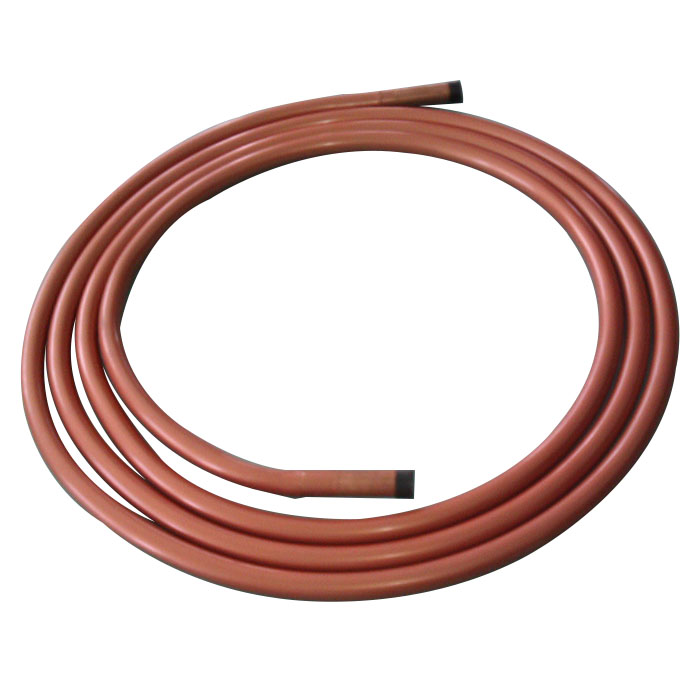
Project budgets frequently drive material selection discussions. You will often see the copper aluminum connecting pipe marketed heavily as a budget-friendly alternative. It promises lower upfront procurement costs. However, you must weigh this initial savings against long-term performance and potential maintenance headaches. Choosing the cheaper option often backfires on complex installations.
Aluminum carries severe technical limitations compared to traditional metals. It offers a significantly lower burst pressure tolerance. This matters greatly for modern high-pressure refrigerants like R-410A. Furthermore, joining dissimilar metals creates a high risk of galvanic corrosion. Moisture in the air accelerates this destructive chemical reaction at the connection joints. Aluminum is also highly vulnerable to kinking during installation. Bending it around sharp corners requires extreme care and special tools.
Our verdict on longevity leans heavily toward traditional materials. We strongly recommend pure insulated copper pipe for commercial, high-pressure, or mission-critical applications. It provides proven lifecycle reliability and handles thermal expansion beautifully. You should reserve copper-aluminum variants strictly for budget-constrained, short-term, or low-pressure appliance use where leaks cause minimal disruption.
Joint compatibility ultimately determines your system's survival. You cannot use standard plumbing components for high-pressure refrigerants. You must use specialized acr fittings copper fittings for all brazed connections. These heavy-duty fittings handle intense thermal cycling and extreme pressures without cracking. Using incorrect fittings guarantees micro-leaks and rapid refrigerant loss over time.
Insulation thickness directly impacts both system efficiency and building health. You must precisely match the insulation wall thickness to your local ambient dew point. Common thicknesses include 3/8", 1/2", and 3/4". Thicker insulation prevents condensation, commonly known as sweating, in highly humid environments. Sweating pipes drip water onto ceiling tiles and cause expensive water damage. For outdoor roof runs, you must verify UV resistance ratings. Constant sun exposure degrades unprotected foam insulation quickly.
Installation realities demand proper physical support throughout the building. Horizontal and vertical hanger spacing must follow IPC or UPC plumbing standards.
Improper spacing causes dangerous pipe sagging over time. Sagging creates traps for compressor oil and places severe mechanical stress on your brazed joints.
Sourcing reliable materials requires diligent vetting. Your chosen manufacturer must provide tubing meeting strict industry standards. Look for explicit ASTM B280 compliance for all ACR copper. The foam insulation should meet ASTM C534 standards for elastomeric materials. These certifications prove the materials will perform safely under high stress.
Manufacturing transparency separates average vendors from industry leaders. You want explicit guarantees of defect-free extrusion. Top manufacturers utilize continuous nitrogen purging during the heating and drawing processes. This advanced technique keeps the internal walls completely oxide-free. Clean pipes prevent dangerous black flakes from breaking off and destroying the compressor valves.
Supply chain reliability remains crucial for hitting aggressive project deadlines. You must thoroughly evaluate your insulated copper pipe supplier before signing contracts. Assess their average lead times and bulk inventory availability. Ask them directly if they provide precise cut-to-length options. Custom lengths minimize job site waste and save your technicians significant labor hours during installation.
Accurate pipe sizing perfectly balances thermodynamic requirements against rigid physical constraints. You must align necessary refrigerant velocity and pressure drop tolerances with structural wall thickness and proper insulation values. Getting these calculations wrong dooms the system before it even starts.
Substituting unverified materials carries massive hidden downstream costs. Miscalculating dimensions inevitably causes severe system inefficiency. It often leads directly to premature and expensive compressor failure. Quality materials protect your entire mechanical investment.
Take action on your next project today. Cross-reference your specific equipment manufacturer's sizing charts carefully. Compare these charts directly against your localized engineering plans. Finally, request detailed technical specification sheets from a verified supplier before finalizing your procurement order to ensure absolute compatibility.
A: HVAC/ACR copper is universally ordered by OD. If your specification requires 7/8" pipe, a true ACR pipe will measure exactly 7/8" on the outside. Plumbing pipe is ordered by nominal size (which is typically 1/8" smaller than its actual OD).
A: While local codes dictate final requirements, standard practice for horizontal Type L copper pipe is to place supports every 6 to 10 feet depending on the pipe diameter, ensuring the hanger supports the pipe without crushing the insulation.
A: Thickness is dictated by the temperature of the refrigerant and the surrounding ambient temperature/humidity. Standard indoor applications often use 3/8" or 1/2" thickness, while high-humidity environments or low-temp suction lines may require 3/4" to 1" to prevent condensation.
A: It is generally discouraged for mission-critical or commercial HVAC systems. R-410A operates at high pressures, and aluminum connections carry a higher risk of fatigue, galvanic corrosion, and micro-leaks compared to standard Type L or Type K pure copper lines.


