
Views: 0 Author: Site Editor Publish Time: 2026-10-25 Origin: Site
Industrial fluid management demands absolute precision from every installed component. Even a microscopic flaw in a single connection can trigger catastrophic failures across entire production lines. Often, engineers underestimate how component fabrication methods impact long-term system reliability. Specifying the wrong fitting manufacturing process directly leads to microscopic porosity. These invisible structural vulnerabilities inevitably cause severe system leaks when exposed to high pressure. You risk unexpected downtime, severe safety hazards, and ruined operational efficiency when you rely on inferior cast components.
Fortunately, superior manufacturing methods eliminate these structural weaknesses completely. We will explore how advanced forming techniques solve these precise industrial challenges. You will discover the top applications for these highly durable components across several demanding sectors. Read on to see how upgrading your infrastructure prevents dangerous leaks and maximizes ongoing system reliability.
Cast components often hide severe internal defects. Sand casting involves pouring molten metal into temporary molds. As the liquid metal cools, tiny gas bubbles become trapped inside. These trapped bubbles create a spongy internal texture. We call this condition microscopic porosity. You cannot see these voids during visual inspections. However, they drastically weaken the overall structural integrity. When you subject porous components to extreme stress, they fail predictably. Fluids and gases easily find escape routes through these invisible micro-channels.
Hot forging techniques solve this exact structural problem. Manufacturers first heat solid brass billets until they become highly malleable. They place this heated metal into precision steel dies. Massive mechanical presses strike the metal instantaneously. This intense physical force shapes the component in a fraction of a second. More importantly, it violently compresses the internal molecular structure. The metal grain flow realigns itself perfectly along the component contours. This alignment maximizes tensile strength significantly. You receive a completely solid, non-porous body. Engineers prefer this meticulous method for achieving zero-leak operational tolerances.
Industrial automation relies heavily on hydraulic and pneumatic power delivery. These systems constantly operate under extreme pressure conditions. Hydraulic lines frequently experience sudden, violent pressure spikes. Industry professionals call this phenomenon the water hammer effect. Inferior cast joints fracture easily under these sudden mechanical impacts. Solid forged components excel in these harsh environments. Their densely compressed grain structure absorbs mechanical shock efficiently. They maintain absolute seal integrity during severe pressure surges. You will often see them deployed on robotic assembly arms. Heavy stamping presses also utilize them extensively for reliable fluid delivery.
Integrating new components requires careful attention to detail. Proper installation ensures maximum lifespan and prevents accidental damage. Follow these specific guidelines for high-pressure systems:
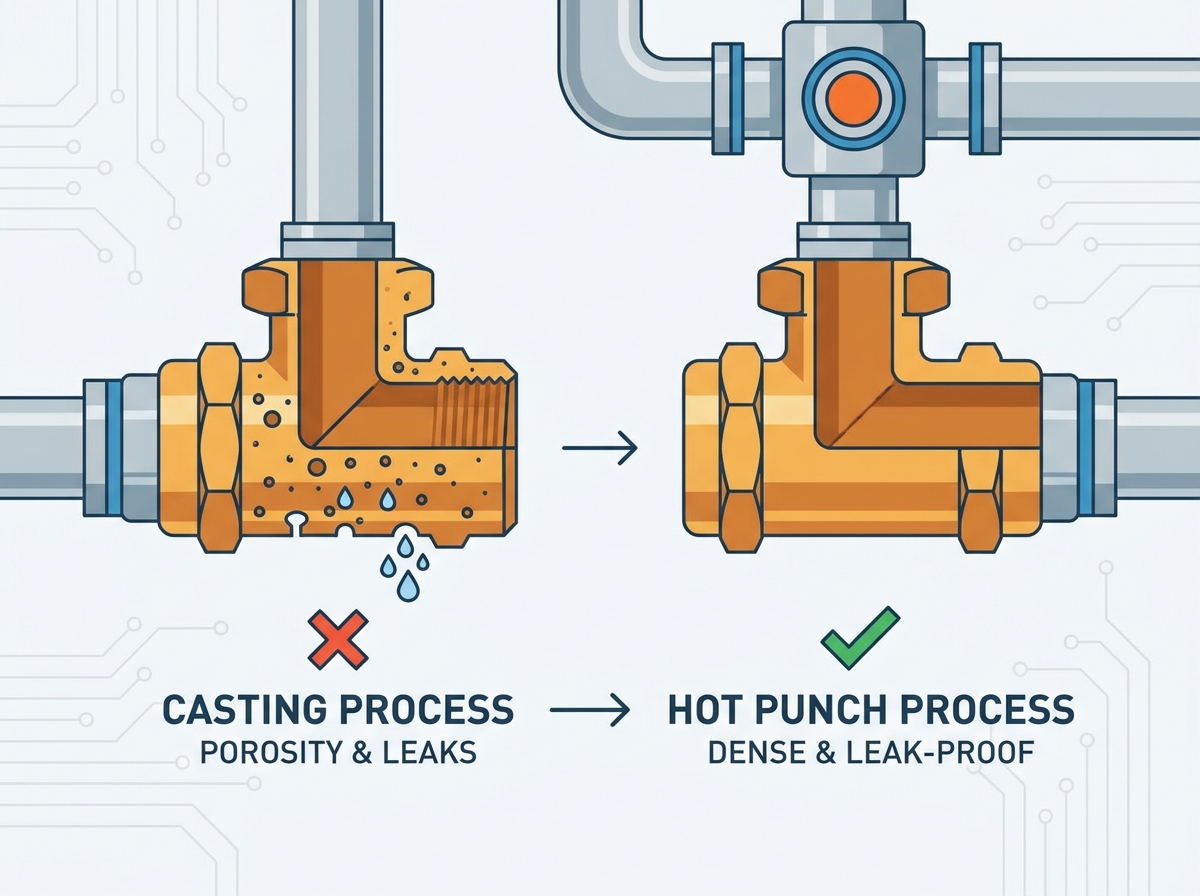
Industrial refrigeration systems handle volatile, highly pressurized gases daily. Modern refrigerants feature exceptionally small molecular sizes. They easily escape through microscopic metal pores found in cheaper fittings. Cast parts often leak these refrigerants over long operational periods. This slow leakage causes massive system inefficiency and severe environmental hazards. Using Hot punch brass fittings eliminates this specific leakage risk completely. The dense, compressed metal structure traps volatile gases securely inside the line. You protect the environment and maintain optimal cooling performance.
HVAC networks also undergo constant, aggressive thermal cycling. Components expand rapidly during active heating phases. They contract significantly during passive cooling cycles. This constant movement induces severe thermal fatigue over time. Thermal fatigue easily cracks weak, porous castings. Solid forged components withstand these daily temperature fluctuations effortlessly. Their uniform molecular structure distributes thermal stress evenly across the entire body. Follow these exact installation steps for commercial HVAC setups:
Chemical processing plants move aggressive fluids through miles of intricate piping. Internal corrosion remains a constant, severe threat to facility safety. Porous metals trap trace chemicals inside tiny surface voids. These trapped chemicals accelerate internal corrosion rapidly. Eventually, the pipe joint fails from the inside out. Smooth, forged internal surfaces prevent this dangerous chemical pooling entirely. The extreme pressure of the manufacturing process leaves no internal cavities behind. Corrosive fluids flow cleanly without leaving destructive chemical residues.
You can specify specialized alloy compositions for added chemical safety. Dezincification-resistant (DZR) alloys work perfectly in these specific environments. They actively prevent zinc from leaching out during aggressive chemical exposure. This specialized material maintains its full structural integrity over decades. You maintain safe, highly reliable fluid handling across your entire facility. Plant operators trust these robust components for hazardous material transport lines.
Offshore oil rigs and marine vessels face brutal operating conditions constantly. Corrosive saltwater spray constantly attacks exposed external infrastructure. Standard plumbing components degrade extremely fast in these harsh coastal environments. Dense molecular structures resist salt penetration highly effectively. The complete lack of surface porosity prevents salt crystals from anchoring and expanding. You significantly extend the maintenance intervals for critical shipboard infrastructure.
Massive marine diesel engines generate relentless, low-frequency mechanical vibrations. These vibrations travel directly through the vessel piping networks. Weaker cast joints inevitably suffer from stress fractures under this constant shaking. The enhanced tensile strength of forged brass fights off vibration-induced metal fatigue. Engineers specify these solid components for critical, life-saving shipboard systems. Bilge pumping networks rely heavily on them for uninterrupted operation. Fire suppression systems demand their absolute, fail-safe reliability during emergencies.
Engineers must carefully evaluate different manufacturing techniques during the specification phase. Understanding these differences prevents critical failures down the line. We compiled this technical comparison to guide your engineering decisions.
| Process Type | Internal Grain Structure | Porosity Risk Level | Pressure Tolerance | Primary Application Focus |
|---|---|---|---|---|
| Hot Punch Forging | Highly Aligned and Compressed | Zero Risk | Excellent | High-Pressure Fluid and Gas Networks |
| Traditional Sand Casting | Random and Highly Porous | Very High Risk | Low to Moderate | Low-Pressure Residential Water Systems |
| Bar Stock Machining | Linear but Unshaped | Very Low Risk | Good | Customized Prototype Production Runs |
Automotive factories operate continuously to meet strict global production quotas. Pneumatic tools require incredibly stable, high-volume air delivery systems. Any unexpected fluid leak halts the entire production line instantly. Plant managers prioritize components built for extreme endurance and reliability. Upgrading to solid forged brass prevents sudden, disastrous air pressure drops. Your pneumatic assembly tools deliver consistent, accurate torque on the line.
High-speed CNC machining centers require constant lubrication and cooling. Coolant lines feed these machines non-stop throughout the production shift. These lines must remain fully pressurized during aggressive machining cycles. Forged components guarantee a secure, leak-proof connection for these critical hoses. You prevent slippery coolant spills on the busy factory floor. You keep your manufacturing facility running smoothly, efficiently, and safely.
Ground support equipment services commercial aircraft between tightly scheduled flights. These specialized machines supply high-pressure nitrogen directly to aircraft landing gear. They also pump volatile hydraulic fluids into critical aircraft control systems. Busy airport ramp environments expose this equipment to severe physical abuse. The rugged exterior of forged components withstands heavy impacts from luggage carts. They also survive accidental strikes from large aircraft tow tractors.
You absolutely cannot risk fluid contamination in modern aviation systems. Even microscopic metal flakes can jam delicate aircraft control valves. Traditional cast fittings sometimes shed small metal particles from their porous interiors. Solid forged brass ensures zero particle shedding from its ultra-smooth internal walls. Ground maintenance crews rely on these incredibly secure connections daily. They guarantee the safety and operational readiness of the entire commercial fleet.
Industrial fluid systems demand components engineered for absolute reliability and safety. We have explored how advanced manufacturing eliminates the severe dangers of microscopic porosity. You now understand why engineers trust solid forged metals for critical infrastructure. Implement these action-oriented next steps to upgrade your facility operations immediately:
A: Traditional casting processes trap tiny gas bubbles as the molten metal cools inside the mold. These trapped bubbles form invisible internal voids throughout the material. You cannot see them with the naked eye during standard inspections. They severely weaken the structural integrity of the final manufactured part.
A: The intense physical pressure used during manufacturing strictly aligns the internal molecular grain structure. This extreme compression process eliminates weak internal voids completely. The resulting highly dense metal absorbs severe mechanical shock and continuous vibration efficiently without fracturing.
A: Yes. The advanced manufacturing process creates an extremely stable, uniform molecular bond. They handle severe thermal expansion and rapid contraction cycles easily. You can safely deploy them in industrial steam networks and boiling fluid lines.
A: It intentionally creates a completely solid, non-porous metal body from a single heated billet. Highly pressurized gases and low-viscosity chemicals cannot find escape paths through the compressed material. You achieve absolute, long-lasting seal integrity across your entire fluid network.
A: Absolutely. They feature incredibly smooth internal surfaces that prevent hazardous chemicals from pooling and causing internal degradation. You can also specify dezincification-resistant alloys for added safety. They excel in aggressive industrial chemical processing plants.


